This is an old revision of the document!
3. Results and discussion
3.1. Analysis of IoT system efficiency
The main value of IoT is not connectivity itself, but data analytics. Traditional systems operate according to rigid schedules, whereas IoT allows for reactivity and proactivity. Data collected by sensors allows managers to dynamically reconfigure office space. The analysis of literature and market data shows that the implementation of IoT systems in building management (BMS) brings tangible benefits measurable in three main areas: energy, operational, and social.
- Energy efficiency: Buildings using advanced occupancy sensors and predictive algorithms show a decrease in electricity consumption of 15–30% annually. This results from eliminating “ghost runs” of HVAC and lighting systems in unoccupied zones.
- Optimization of maintenance costs: Moving to a Predictive Maintenance model allows for extending the life cycle of technical equipment by approximately 20% and reducing the costs of sudden failures by nearly 40%.
- Impact on productivity: Analysis of IEQ (Indoor Environmental Quality) parameters indicates that precise control of CO2 concentration and lighting intensity translates into an increase in office work efficiency by 3–5%, which on a corporate scale is a gain that exceeds energy savings.
3.2. Discussion on implementation barriers
Despite numerous advantages, discussions in the scientific community point to two critical problems: cybersecurity and fragmentation of standards. Most IoT devices in buildings have limited computing power, which prevents the use of strong encryption. This makes a smart building a potential entry point for Ransomware attacks on the corporate network. Furthermore, the lack of full interoperability between manufacturers (e.g., difficulty connecting sensors from company X to the control unit from company Y) still forces investors into vendor lock-in.
3.3. Author's example: Design of an air quality monitoring system in a conference room
As part of the practical analysis, a simple measuring node dedicated to monitoring environmental parameters in a conference room was designed and tested.
Concept and components
The system is based on Edge Computing architecture – this means that the decision to activate support systems (e.g., ventilation) is made directly on the device, which shortens response time and increases building reliability in the event of a Wi-Fi network failure.
Tools used:
- Simulator: Wokwi (environment for prototyping embedded systems).
- Microcontroller: ESP32 (chosen for its low power consumption).
- Sensor: DHT22 (digital sensor measuring temperature and humidity with high precision).
- Indicator: LED with a 220Ω resistor (simulating the activation of air conditioning/heat recovery).
Connection diagram (Hardware)
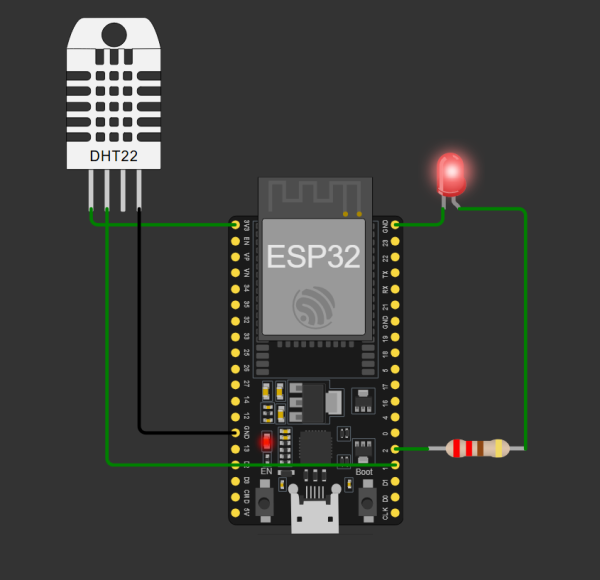
The following diagram shows the physical structure of connections made on a virtual microcontroller:
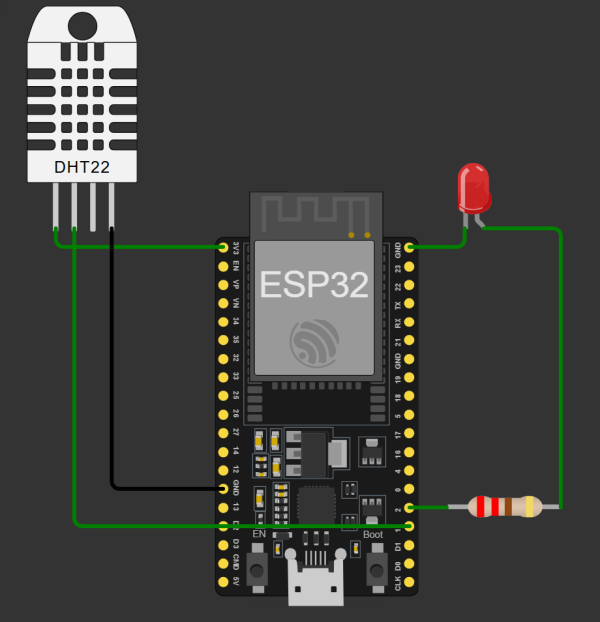
DHT22:
- VCC → 3.3V
- GND → GND
- Data → GPIO 15
LED:
- Anode (+) → resistor → GPIO 2
- Cathode (-) → GND
Software implementation
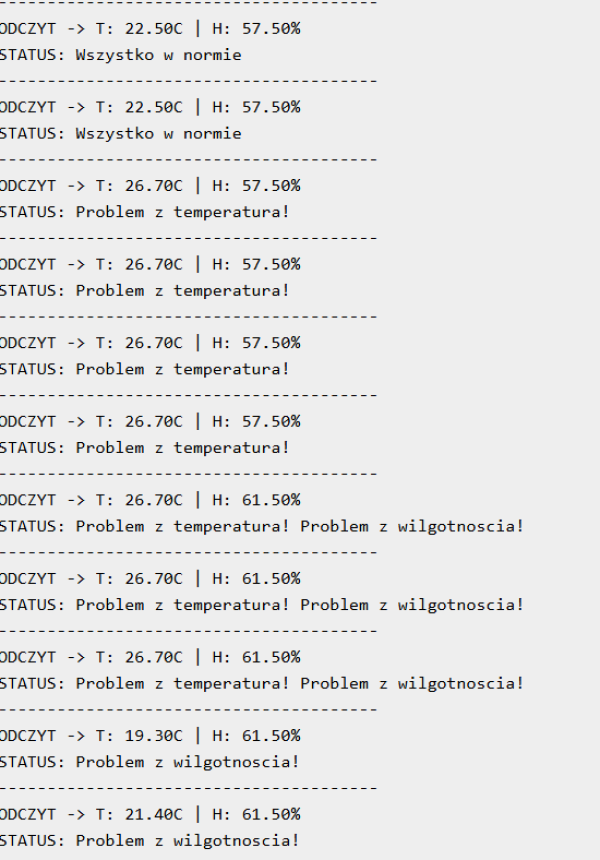
The following code performs readings every 2 seconds. It uses an error-filtering function (isnan) and threshold logic for comfort temperature set between 18°C and 24°C and humidity between 30% and 60%.

Result: Analysis of the prototype showed that the DHT22 sensor, despite its simplicity, is sufficient for monitoring general work comfort in a conference room. In a real-world implementation in an IoT-managed building, the code should include a Wi-Fi section responsible for sending this data to a central database, allowing the property manager to generate daily reports and optimize the building's heating curve.