Practical Example: Design of an Air Quality Monitoring System for a Conference Room
As part of the practical analysis, a simple measurement node dedicated to monitoring environmental parameters in a conference room was designed and tested.
Concept and Components
The system is based on an Edge Computing architecture—this means that the decision to activate supporting systems (e.g., ventilation) is made directly on the device. This shortens response time and increases the building's reliability in the event of a Wi-Fi network failure.
Tools Used:
- Simulator: Wokwi (an environment for prototyping embedded systems). 1)
- Microcontroller: ESP32 (chosen for its low power consumption and integrated connectivity).
- Sensor: DHT22 (a digital sensor measuring temperature and humidity with high precision).
- Signaler: LED diode with a 220Ω resistor (simulating the activation of air conditioning/heat recovery).
Wiring Diagram (Hardware) The following diagram shows the physical connection structure implemented on the virtual microcontroller:
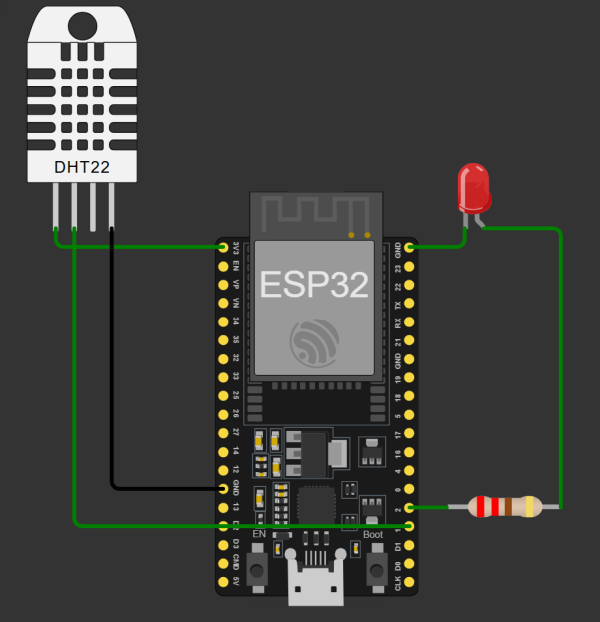
DHT22 Wiring:
- VCC → 3.3V
- GND → GND
- Data → GPIO 15
LED Wiring:
- Anode (+) → Resistor → GPIO 2
- Cathode (-) → GND
Software Implementation
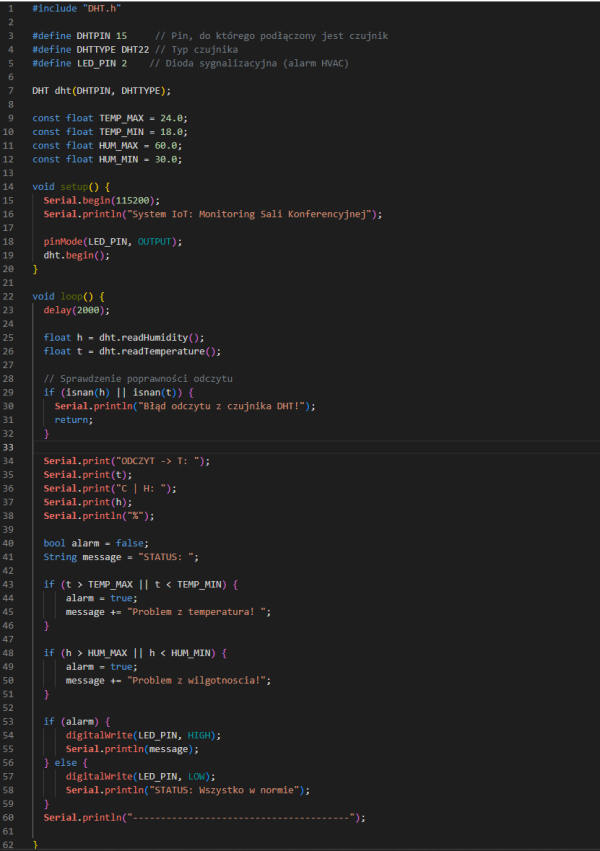
The following code performs parameter readings every 2 seconds. It includes a function to filter out erroneous readings (isnan) and threshold logic for comfort levels, set to a temperature range of 18°C to 24°C and humidity between 30% and 60%.
Results
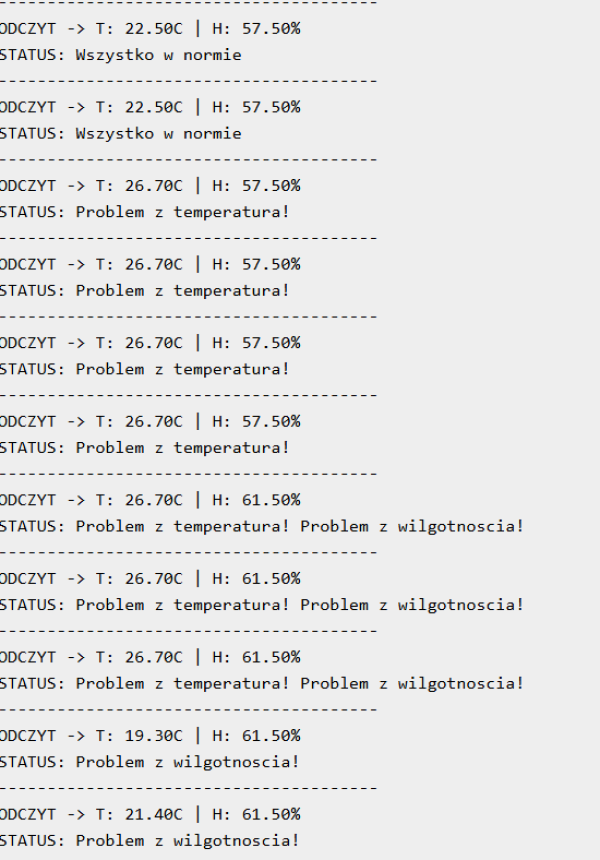
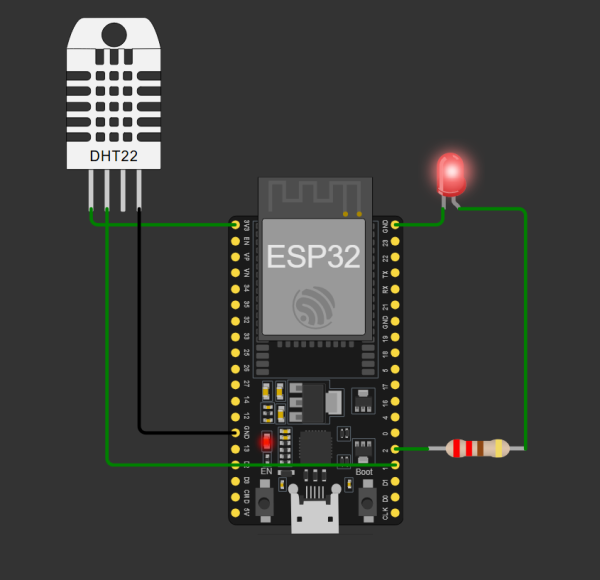
Analysis of the prototype showed that the DHT22 sensor, despite its simplicity, is sufficient for monitoring general work comfort in a conference room. In a real-world IoT-managed building deployment, a Wi-Fi section would be added to the code to handle data transmission to a central database. This would allow the property manager to generate daily reports and optimize the building's heating curve.
1)
Wokwi Environment Documentation, ESP32 Simulator, https://docs.wokwi.com/guides/esp32, accessed: 18.01.2026.