Spis treści
Materials and Methods
Structural Methodology: IoT Layered Architecture
The primary method for describing and implementing IoT systems in building management is based on a three-layer reference architecture. This approach allows for the systematization of data flow from the physical sensor to the final management application.
- Perception Layer (Sensing Layer): Includes the hardware components of the system, such as temperature and humidity sensors, gas detectors, energy meters, and actuators (e.g., valve controllers). This method relies on continuous sampling of analog signals and their conversion into digital form.
- Network Layer: Responsible for secure data transmission. It utilizes short-range wireless communication methods (ZigBee, Bluetooth Mesh) and long-range, low-power methods (LoRaWAN). The use of network Gateways is crucial here to aggregate data and transmit it to central units.
- Application and Processing Layer: Employs analytical methods, including Cloud Computing and Edge Computing. This allows for data visualization in control panels and automated management decision-making.
Areas of Application and Communication Tools
The use of the Internet of Things in construction is a process that transforms static objects into “living” organisms that react to data. Below are the areas currently setting trends in the industry:
Office Buildings: In modern high-end office buildings, IoT serves not only to save costs but, above all, to improve employee comfort:
- Smart Lighting: IoT systems adjust the color temperature of light (from cool blue in the morning to warm yellow in the afternoon), regulating the circadian rhythm of employees and increasing focus.
- Heatmap Analysis: Managers can see which parts of the office are most crowded, allowing for better planning of cleaning services or other activities.
- Arc Fault Detection: Advanced sensors in electrical switchgear detect anomalies that could lead to fire, disconnecting power in milliseconds.
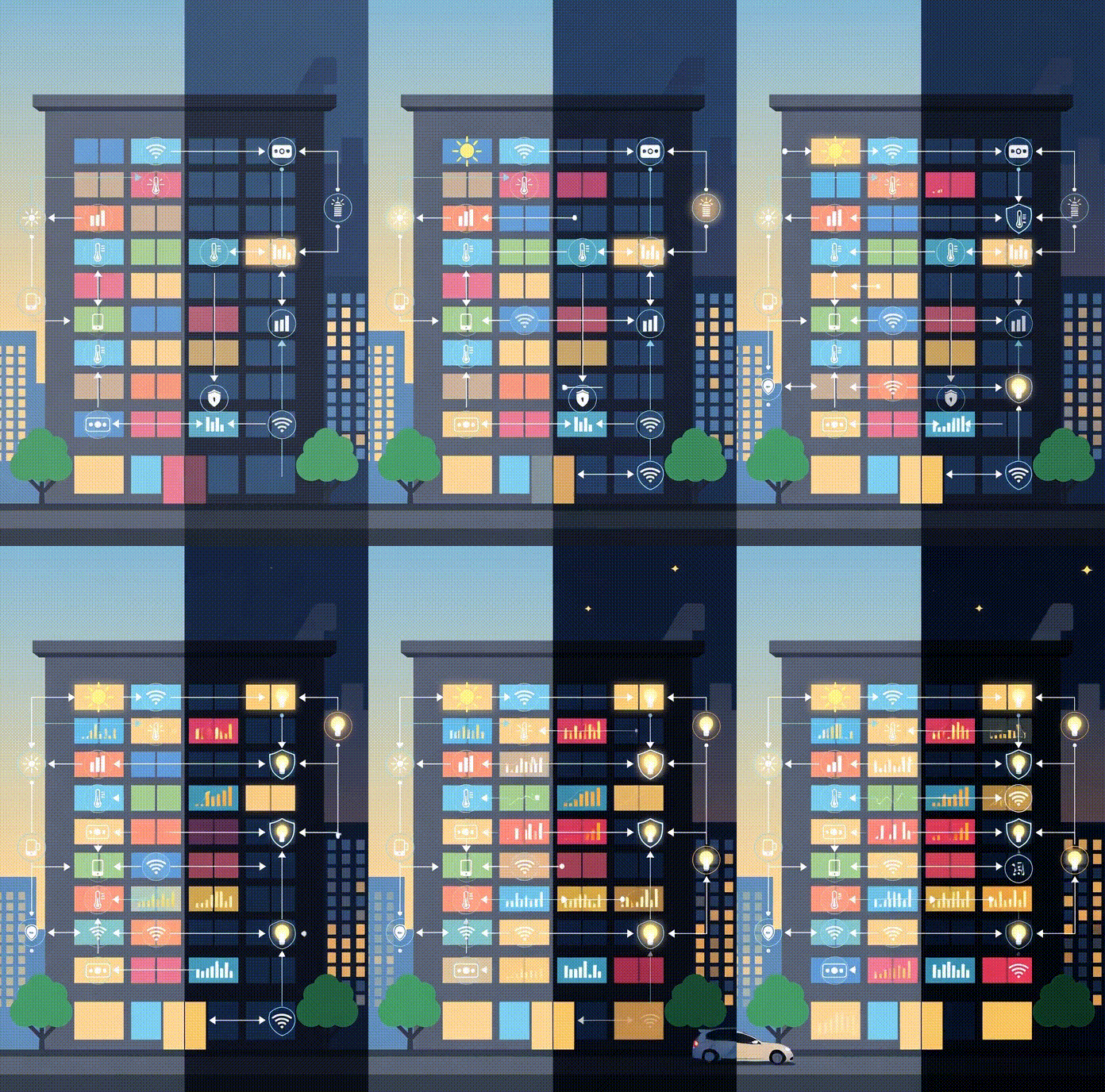
Logistics Centers and Warehouses: Warehouses, especially high-bay ones or those handling food/medicine, rely on precision:
- Zoning: HVAC systems do not cool the entire facility, but only the zones where employees are currently present or where goods requiring low temperatures are stored.
- Supply Chain Monitoring: IoT sensors on racks and loading bays integrate with building systems, automatically opening ramps and adjusting ventilation to forklift traffic intensity.
Residential Construction (Smart Home / Smart Building): Here, IoT focuses on safety and user experience. Smart Buildings are defined in literature as: “Smart buildings combine building automation systems (BAS) with the Internet. BAS allows for the control and management of various building devices—such as HVAC (heating, ventilation, air conditioning), lighting, or blinds—using sensors and actuators…” 1):
- Predictive Failure Detection: Flood sensors integrated with ball valves can automatically shut off the water supply in the entire riser before property damage occurs.
- Access Management: Virtual keys sent to tenants' smartphones replace physical keys and increase security by logging every entry into the building.
Healthcare Buildings and Hospitals (Smart Healthcare): This is one of the most critical areas where IoT saves lives:
- Asset Tracking: Real-time location of medical equipment (e.g., ventilators, defibrillators) on the building plan, shortening staff response times.
- Environmental Monitoring in Operating Rooms: Precise control of overpressure in rooms to prevent microbes from entering from hallways.
The most important communication standards that form the “building material” of modern building networks include:
- BACnet Protocol (Building Automation and Control networks): A global ISO standard for building automation designed specifically to enable the integration of devices from different manufacturers within a single network. Wolfgang Kastner et al. describe it as: “The Building Automation and Control Network (BACnet) protocol was specifically developed to meet the needs of building automation and control systems of all sizes and types… to provide the highest possible level of interoperability…” 2)
- MQTT Protocol (Message Queuing Telemetry Transport): A lightweight data transmission protocol, ideal for devices with limited computing power. “The MQTT protocol uses the publish/subscribe pattern to provide transition flexibility and simplicity of implementation… MQTT is suitable for resource-constrained devices…” 3)
- PoE Technology (Power over Ethernet): Allows for the transmission of electricity and data via a single network cable. As stated by Daniel Minoli et al.: “In particular, Power over Ethernet (PoE) technology, as part of an IoT-based solution, offers breakthrough opportunities in revolutionizing in-building connectivity…” 4)
Primary areas of application include:
- Energy Management (Smart Metering): Precise monitoring of utility consumption broken down by floor or tenant.
- Indoor Environmental Quality (IEQ) Optimization: Dynamic regulation of air composition and lighting.
- Space Optimization: Analysis of conference room and “hot-desking” utilization based on occupancy data.
Advantages and Disadvantages of IoT Solutions in Construction
The implementation of methods based on the Internet of Things involves balancing operational benefits against technical risks.
| Category | Advantages (Benefits) | Disadvantages (Challenges) |
|---|---|---|
| Economics | Reduction of operational costs (OPEX) through energy optimization. Energy savings up to 15-30%. | High initial investment (CAPEX) for infrastructure and sensors. |
| Operations | Transition from reactive to predictive maintenance (detecting failures before they occur). | Lack of full standardization – difficulties in integrating multi-vendor devices. |
| Safety | Real-time monitoring of critical parameters (gas leaks, smoke). Lower CO2 emission. | Vulnerability to cyberattacks; risk of unauthorized control over building systems. |
| Comfort | Personalization of climate settings and automatic adjustment of environmental parameters. | System complexity; requirement for highly qualified technical personnel. |

Data Verification and Quality Assurance Methods
To ensure the reliability of the management system, sensor calibration methods and data cleaning algorithms are applied. These remove “noise” and erroneous readings that could lead to inappropriate responses from actuators (e.g., unnecessary heating activation due to a faulty temperature reading).